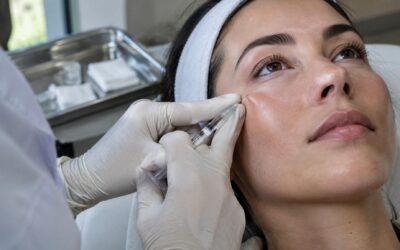
Textural damage is a different problem than active breakouts, and it calls for a different plan. You want smoother skin, but you also need a realistic sense of what a non-invasive treatment can do for indentations left behind by old inflammation. The best HydraFacial for acne scars works as part of a broader medical strategy: it refines surface quality and preps your skin for deeper interventions if you need them.
This treatment offers genuine benefits for specific types of scarring. It isn’t a standalone cure for deep structural damage, though. Knowing exactly what it can and can’t do helps you decide whether to book a consultation or look into more aggressive resurfacing first.
How HydraFacial Targets Acne Scar Texture
The technology behind this facial combines mechanical exfoliation with simultaneous serum infusion, addressing the surface irregularities that make scars look more pronounced. It doesn’t rebuild lost collagen the way a laser does. But it does create a smoother canvas, and that alone cuts down the shadowing effect that makes atrophic scars visible under direct light.
The Role of Vortex Suction in Scar Revision
Vortex suction physically clears debris from widened pores and scar margins, the spots that usually exaggerate textural unevenness. Clearing the edges of shallow depressions helps them reflect light more evenly, so rolling scars look less deep, without any damage to the tissue around them.
You’ll notice smoothness right away, because the device levels the stratum corneum across both healthy and scarred skin. That uniformity matters when you’re applying makeup or skincare over textured zones.
Why Hydration Matters for Scar Healing
Scar tissue has no functional sebaceous glands. That leaves it permanently drier and less pliable than the skin around it. Dehydrated scars look deeper, too, because the lack of moisture makes the tissue contract and catch shadows more sharply.
Infusing hyaluronic acid and peptide-rich serums directly into these dry zones temporarily plumps the extracellular matrix. The hydration boost softens rigid scar borders and improves elasticity, so your skin looks more forgiving between professional treatments.
Realistic HydraFacial Results for Different Scar Types
Not all acne scars respond the same way to vortex-fusion technology. Knowing the difference between scar types up front prevents disappointment after your first session. Shallow, broad depressions typically show measurable improvement. Narrow, deep defects mostly stay put with surface exfoliation alone.
Improvement Potential for Rolling and Boxcar Scars
Rolling scars have sloping edges that blend gradually into normal skin, which makes them good candidates for surface refinement through consistent exfoliation. Patients with rolling scars often report smoother makeup application after a full series, as the treatment softens the transition zones between scar and healthy tissue.
Boxcar scars, with their sharp vertical edges, benefit less dramatically, but they still gain from the decongestion and hydration that soften their boundaries. In clinical practice, wider boxcar scars with shallower depths tend to respond better than narrow ones with steep walls.
Limitations with Deep Icepick Scars
Icepick scars punch straight down through the dermis, with a base far below anything a topical or surface-level treatment can reach. HydraFacial can’t change the architecture of these deep channels, and expecting it to erase them leads nowhere but frustration.
These scars need targeted chemical reconstruction (TCA cross) or surgical excision to see real change. Here, HydraFacial is maintenance therapy at best: it keeps the surrounding skin clear so that whatever procedural work comes next has better results to build on.
Recommended Session Frequency for Skin Rejuvenation
Texture correction takes consistency. Each session builds on the last rather than delivering a transformation in one visit. Clinical protocols for texture correction typically call for a series of three to six treatments, spaced two to four weeks apart, to get the full cumulative benefit.
Initial Treatment Series vs. Maintenance
Your initial series focuses on breaking down accumulated dead cells and retraining your skin’s renewal cycle to work more evenly across scarred areas. Skip sessions during this phase and you reset progress, because the skin hasn’t yet locked in a new baseline of cellular turnover.
Monthly maintenance visits preserve those gains once the initial series wraps up, and they keep congestion from rebuilding in the scar margins. The cadence matches your skin’s natural desquamation cycle, so texture improvements compound instead of fading between appointments.
Combining Treatments for Enhanced Outcomes
Licensed providers may pair this facial with chemical peels or microneedling to move texture correction along faster, safely, within one treatment plan. Sequenced right, the facial preps skin before a deeper procedure or soothes it afterward, so you get the benefit of both without compromising the skin barrier.
Our licensed medical team customizes booster serums during each session to match your scar depth and skin sensitivity. That personalization is what keeps adjunctive therapies working with your scar revision goals instead of against them.
Medical Supervision vs. Spa-Grade Facials
Treating compromised skin takes clinical judgment that goes beyond standard esthetic training, especially around permanent textural changes. Licensed medical staff check barrier function and inflammation levels before every extraction, so vulnerable scar tissue doesn’t end up with post-inflammatory hyperpigmentation.
Spa-grade facials don’t have the diagnostic rigor to tell a stable scar from an active inflammatory lesion that could get worse with mechanical manipulation. Medical oversight keeps booster concentrations and suction intensity within safe limits for your skin’s healing capacity.
You deserve care built around long-term skin health, not just how your skin feels walking out the door. Our licensed injectable and skin care services operate under physician supervision specifically to protect patients with complex dermatological histories from adverse events.
Post-Treatment Care and Downtime Expectations
Most clients go back to normal activities right away, though sun protection becomes non-negotiable while freshly exfoliated scar tissue heals. UV exposure in the first forty-eight hours can trigger melanin production in newly exposed cells, which darkens scar borders instead of fading them.
Temporary redness or mild purging can show up as trapped sebum releases from congested scar margins in the days after treatment. That’s a sign the extraction reached deeper debris, not a sign that the procedure caused damage or irritation.
Skip retinoids and acids for at least five days post-treatment, so the barrier can recover fully before you bring active ingredients back in. Gentle cleansing and mineral sunscreen are the foundation of safe recovery, and they preserve the hydration infused during your session.
Finding Expert HydraFacial Treatment Near Me
A search for “HydraFacial treatment near me” turns up plenty of results, but few providers specialize in acne scar revision rather than general relaxation facials. Judge local clinics by their experience with textural disorders, and you’ll get protocol-driven care instead of a generic service menu.
When comparing aesthetic treatment options, prioritize facilities with documented outcomes in scar patients over ones advertising the lowest price. Expertise in scar morphology tracks directly with safer, more predictable results over multiple sessions.
Questions to Ask During Your Consultation
Ask potential providers how many scar revision cases they manage monthly, and what adjunctive therapies they recommend alongside vortex fusion. The answer tells you whether they treat this facial as isolated pampering or as integrated medical therapy inside a bigger plan.
Request before-and-after photos of patients with scar types similar to yours, not generic glow shots. Visual evidence of texture improvement tells you far more about technical competency than testimonials about relaxation or hydration ever will.
Ask about customization options for booster serums, and whether pricing reflects medical-grade formulations built for compromised skin. Understanding medspa pricing factors helps you budget for a series rather than a single visit.
Alternative Options When HydraFacial Is Not Enough
HydraFacial works best for superficial textural refinement and maintenance. Deep atrophic scars often need subcision or fractional laser resurfacing to actually change the structure underneath. Recognizing that limitation early saves you time and money, and points you toward interventions that remodel the dermal architecture itself.
Subcision releases the fibrotic tethers pulling down rolling scars, opening space for new collagen that no facial can stimulate on its own. Fractional lasers create controlled thermal zones that trigger real neocollagenesis in icepick and deep boxcar scars, reaching where surface treatments can’t.
Think of this facial as complementary maintenance inside a physician-led scar management plan, not a replacement for the procedural work you actually need. That’s how each modality ends up treating the specific layer of damage it was designed for.