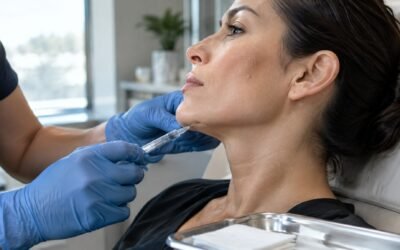
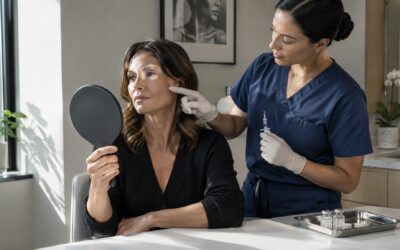
Forehead lines are usually the first thing people ask about when they come in for Botox. They are also the area where the quote can surprise you, because the final number depends on your muscles, not on a flat menu price. This guide explains how the forehead is priced, what to expect as the result develops, and how to judge a quote before you commit.
What Botox for Forehead Lines Costs
The honest answer is that the cost of Botox for forehead lines is set by how much product your forehead needs, and that can only be confirmed in person. We would rather give you a quote you can trust than a range that sounds good online and falls apart at your appointment.
Every injection at The Rolling Stone MedSpa is performed by licensed medical staff, and that matters for price as much as for safety. A quote from a medically supervised team reflects an assessment, a plan and a person accountable for the result.
How Forehead Treatment Is Priced
Clinics generally quote in one of two ways. Some charge per unit, so the total is the number of units multiplied by the unit rate. Others quote per treatment area, which bundles an expected number of units into one figure. Our per-unit Botox pricing guide walks through the math, so we won’t repeat it here.
What moves the total in either model is fairly consistent:
- The strength of your forehead muscle, since stronger muscles usually need more product.
- How deep the lines are, and whether they show at rest.
- Where your brows sit, which affects how cautiously the forehead is treated.
- Whether the forehead is treated alone or alongside other areas.
- Whether follow-up is included in the quote.
A lower price does not always mean a lower cost. If a quote covers too few units for your muscle, you may see a patchy result that fades early and needs a top-up.
If you would like an itemized figure for your own forehead, you can book an in-person assessment with our licensed team, and we will go through the plan with you before anything is injected.
Forehead Alone Versus a Bundled Upper-Face Plan
Many people treat the forehead, the frown lines and the outer corners of the eyes (crow’s feet) in one visit. That is a bundled upper-face plan, and it can make sense because these areas work together.
Take a typical comparison. One quote lists forehead only. Another lists forehead, frown lines and crow’s feet at a single total. The second number is larger, but that tells you nothing on its own. You are comparing different treated areas.
To compare fairly, line up three things: the areas treated, the units in each area, and what each quote includes afterwards. Neither option is automatically cheaper per area. The better choice is the one that matches what bothers you when you look in the mirror.
Forehead Lines Versus Frown Lines: How Each Area Changes the Cost
Forehead lines run horizontally across the brow. Frown lines sit between the eyebrows, and people often call them the 11s because of their shape. They are controlled by different muscles, and those muscles behave differently.
The muscles that pull the brows down and together sit around the frown area, and they are often stronger and need a different dose from the thin, flat muscle that lifts the forehead. So botox for 11 lines is a separate treatment from forehead work, even though both happen in the same upper-face zone. That is also why the same clinic may price the two areas differently, and why frown lines Botox cost is not simply the forehead figure copied across.
The two areas also depend on each other. Relaxing the forehead without addressing the frown muscles can leave the brows pulled down, because the muscles that lower them keep working against a quieter lift. A well-planned treatment looks at both together, even when you only want one treated.
This is the main reason a bundled upper-face plan is worth discussing. It does not mean you must treat everything. It means your injector should explain what happens to the neighbouring area before you choose.
Forehead Botox Units Needed: What Sets the Count
People often search for the forehead Botox units needed as if there were a standard number. There is not. We won’t promise you a count here, because any figure quoted without seeing your face is a guess.
The count becomes meaningful only after an in-person assessment, when your injector can watch you raise and relax your brows and see how the skin moves.
Muscle Strength, Line Depth, and Brow Position
Four things set the number, and your injector reads all of them at once:
- Muscle strength. A strong, active forehead muscle usually needs more product than a subtle one.
- Line depth. Fine lines that appear only when you lift your brows are treated differently from deeper creases.
- Brow position. A low or heavy brow calls for a lighter, more careful approach to the forehead, so the brows are not weighed down.
- Motion versus rest. Lines that show only in movement respond more fully than lines you can see when your face is still.
Because these factors differ from person to person, two people with similar-looking lines can leave with different unit counts. Neither is wrong.
A higher count is not a better treatment. Often the goal is the smallest dose that gives you the softening you want while keeping your expression natural.
What Botox Does for Forehead Wrinkles: Before and After
Botox for forehead wrinkles works on the cause, not the surface. Dynamic lines form because the forehead muscle contracts again and again every time you raise your brows. Relaxing that muscle softens the lines that appear in motion, which is the general principle behind all injectable wrinkle treatment of this kind.
The aim is a smoother forehead that still moves. Done well, you look rested, and people say you look well rather than asking what you’ve had done.
The First Days and the Full Result
You will not walk out looking different. In the first days, you notice the forehead gradually becoming quieter when you raise your brows. Over the following weeks the effect settles and reaches its full strength, and that is the point to judge the result.
For that reason, a fair review of your treatment happens after the product has had time to work, not the next morning. Our guidance on what to avoid after Botox covers the first hours and days, and following it helps the product stay where it was placed.
If we hold consented client photos for this treatment, each one should be labeled with the time elapsed since the injection. Ask to see them, and be wary of any unlabeled or stock image offered as proof.
Dynamic Lines Versus Static Lines
Picture two readers. The first notices lines only when she raises her brows. The second sees creases even with her face completely still.
The first usually sees a clear change in motion, because her lines are almost entirely muscle-driven. The second may see the lines soften only partly. Creases that persist at rest are etched into the skin, and they respond more slowly and often incompletely to muscle relaxation alone.
This gap is a common source of disappointment, so we raise it before treatment, not after. For lines etched at rest, a complementary plan may be part of the conversation, and your clinician can explain what is appropriate for your skin.
Botox is not a filler or a resurfacing treatment. It will not erase a deep crease on its own, and it is not the right promise to make to anyone who expects that.
How Long Forehead Botox Lasts and When to Return
Most readers want to know how long forehead Botox lasts. The effect fades gradually rather than stopping overnight. Movement returns bit by bit, and the lines you were treating slowly reappear. Because the change is so slow, many people only notice it when they see a photo from earlier.
A return visit makes sense when you start to see the lines coming back in motion and the forehead feels more active than you want. Booking at that point, rather than waiting for the full effect to disappear, often makes it easier to keep a steady result.
Your own timeline is what counts, and your injector can give you an expected window at your visit. If you have an event coming up, our notes on timing your Botox for longer-lasting results can help you plan around it.
What Shortens or Extends the Result
Several things shift how long your result holds:
- Dosing. A dose too light for your muscle will fade sooner.
- Muscle strength. Strong, expressive muscles tend to work through the product faster.
- Individual metabolism. Bodies break the product down at different rates, and you cannot fully predict yours.
- Consistency. Regular treatments over time often settle into a more predictable rhythm.
Nobody can promise an exact duration, and that includes us.
Forehead Botox Safety and Who Should Wait
When treated by licensed medical staff, forehead Botox is a well-established treatment. But no injectable is completely risk-free, and anyone who says otherwise is not giving you the full picture. At The Rolling Stone MedSpa, your injections are performed by licensed medical staff, and suitability is confirmed in person before any treatment.
Common Side Effects and Rarer Risks
The common effects are mild and short-lived. They include small bumps or redness where the needle went in, slight bruising, and a mild headache or a feeling of tightness in the forehead afterwards.
Rarer risks are worth knowing about too. The best known are temporary brow heaviness and, less often, a drooping eyelid. Both happen when product affects a nearby muscle, and both fade as the product wears off, though you cannot hurry that along.
Careful placement and good aftercare lower these risks. Your injector’s knowledge of facial anatomy matters here, and so does following your aftercare instructions, such as the ones in our guide to what to avoid after Botox.
Some people should wait. Pregnancy and breastfeeding are common reasons to delay, and other health factors may apply. Please tell your clinician about your medical history and any medications at your assessment, because only an in-person conversation can confirm that treatment is right for you.
Comparing Options and Booking a Forehead Consultation
Cost is a fair thing to weigh, and you are right to compare. The useful comparison is between whole plans, not sticker prices.
Cheaper Alternatives and Where They Fall Short
There are lower-cost options. Some products are marketed as wrinkle relaxers, and they may differ from Botox in how quickly they start, how long they last and how they are dosed. Our piece on how a wrinkle relaxer compares with Botox goes into that in more detail.
Topical creams and devices are a different matter. They can improve skin texture, but they do not relax the muscle behind moving lines, so they will not do what injections do for lines that form when you raise your brows.
A cheaper option is a good fit if it delivers what you actually want. It is a poor fit if you end up paying twice to get the result you hoped for the first time.
What a Fair Forehead Quote Includes
A fair quote tells you more than a total. Look for these:
- Units. How many are planned, and for which muscles.
- Treated area. Forehead only, or forehead with frown lines and crow’s feet.
- Follow-up. Whether a check-in or adjustment is part of the price.
- The consultation. What it covers, and whether it is charged separately. Confirm the clinic’s own policy rather than assuming.
Our list of questions to ask before booking a medspa will help you hold any clinic to the same standard, including ours.
If you are ready to take the next step, we invite you to book an in-person Botox consultation with The Rolling Stone MedSpa’s licensed medical team. We will assess your forehead, talk through what is realistic, and give you an itemized quote. You can also read about what happens at your first Botox consultation so you know what to expect when you arrive.
Frequently asked questions
How long does Botox in the forehead usually last?
The effect fades gradually rather than stopping suddenly, so you notice movement creeping back before the lines fully return. Duration depends on your dose, muscle strength, metabolism and how consistently you are treated. Your injector can give you an expected window for your own forehead at your visit.
Is Botox 100% safe?
No injectable is risk-free. Common effects such as small bumps, redness, mild bruising or a headache are short-lived. Rarer risks include temporary brow heaviness or eyelid droop. Careful placement by licensed medical staff and good aftercare lower them, and suitability is confirmed in person.
Is there a cheaper alternative to Botox?
Yes, but compare the whole plan, not just the price. Wrinkle relaxers may differ in onset, duration and dosing. Creams and devices improve skin quality but do not relax the muscle behind moving forehead lines. A cheaper option works if it gives you the result you want.
Is $600 a lot for Botox?
The number alone cannot tell you. What matters is how many units it covers, which areas are treated, and whether follow-up is included. A quote for forehead only and one for forehead, frown lines and crow’s feet are not comparable. Ask for an itemized quote and compare it line by line.
Why are forehead lines and frown lines priced separately?
They sit on different muscles that need different doses. The forehead muscle lifts the brows, while the muscles between the brows pull them down and together. A clinic may price each area separately, or offer a bundled upper-face plan that treats them together.