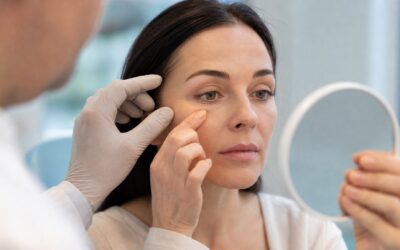
Searching for under eye filler near me often starts with a simple wish: to look rested. But finding the right provider means looking past proximity and prioritizing safety instead. The skin beneath your eyes is uniquely delicate, and treating it well takes a level of anatomical precision that general aesthetic training doesn’t always cover. You deserve a treatment plan built on medical expertise, not a transactional approach to volume replacement.
Why Provider Expertise Matters for Under Eye Hollows Treatment
Tear trough augmentation is one of the most technically demanding facial filler procedures there is. The skin is thin, and the infraorbital region is dense with blood vessels, so an injector has to navigate complex anatomy with every needle placement. A mistake here can mean visible lumps, swelling that won’t quit, or vascular complications that are hard to reverse without specialized help.
Anatomy of the Tear Trough Area
The tear trough isn’t just a line to fill in. It’s a structural transition zone between the lower eyelid and the cheek. Volume loss here usually comes from bone resorption and fat pad descent, not simple surface wrinkling, and that changes where and how product needs to go. Qualified providers typically use hyaluronic acid fillers made specifically for the periorbital area, because they integrate smoothly with delicate tissue and can be dissolved if something goes wrong.
Medical Supervision vs. Spa Settings
Choosing a licensed medical professional cuts your complication risk compared with non-medical settings, where aesthetic training can be limited. At The Rolling Stone MedSpa, licensed medical staff trained in facial anatomy and complication management perform every injectable treatment. That medical oversight means your treatment addresses the underlying cause safely, instead of just masking the symptom for a while.
Complication rates for tear trough filler run significantly lower when the provider specializes in periorbital aesthetics rather than general injecting.
What to Expect During Your Under Eye Filler Consultation
Think of your under eye filler consultation as a diagnostic visit first. The provider is checking whether volume restoration is actually the right answer for your concern, based on your bone structure, skin elasticity, and the specific nature of the shadowing or hollowness you’re seeing. If you’re unsure what that visit looks like, what to expect at your first aesthetic consultation can help ease any anxiety before you arrive.
Assessing Candidacy for Dark Circles Filler
Not every dark circle responds to filler. Pigmentation and vascular issues call for entirely different treatments. A skilled injector assesses your skin quality and volume deficit to work out whether dark circles filler will give you a natural improvement, or whether another approach makes more sense. Honest assessment here is what prevents disappointing results, and it’s what keeps you safe.
Discussing Aesthetic Goals and Medical History
Bring a complete medical history to this appointment: medications, supplements, any previous facial treatments. That information lets your provider customize the technique and product to minimize bruising and get the most longevity out of your results. Your goals matter, but they have to line up with what’s anatomically possible and medically safe for your face.
Evaluating Local Clinics for Safe Tear Trough Filler Near Me
Finding tear trough filler near me means checking credentials that go well beyond a basic nursing or cosmetology license. Facial aesthetics calls for specialized post-graduate training in ocular safety and advanced injection technique, training that standard medical education doesn’t provide on its own. Questions to ask before booking a medspa can help you check whether a clinic meets that bar.
Verifying Credentials and Specialized Training
Look for providers who hold specific training in facial anatomy and periorbital rejuvenation, not just a generic aesthetics certificate. That kind of credential points to dedicated study of the infraorbital region and its particular risks. A provider’s willingness to talk openly about their training and how they manage complications tells you a lot about their competence.
Reviewing Before-and-After Portfolios
Look at unedited photos of real tear trough cases to judge a provider’s consistency and whether their results look natural. Pay attention to patients whose anatomy resembles yours, not just the ideal cases with mild volume loss. Consistent results across a range of faces say more about technical skill than a handful of perfect photos ever could.
If complications do happen despite everyone’s best efforts, knowing a clinic offers safe filler correction services is worth a lot of peace of mind.
Understanding Eye Bag Filler Cost and Value
Eye bag filler cost depends on provider expertise, product type, and location, not just how many syringes go in. Paying for a specialist usually buys you longer-lasting, safer results than a discount option that may be cutting corners on training or product quality. The price should reflect the full care model: consultation, follow-up, and access to medical support if you need it.
Focusing only on price ignores the real value of avoiding a costly correction, or worse, managing a complication.
Preparing for and Recovering from Under Eye Rejuvenation
Good preparation and aftercare matter a lot in this vascular area, since they’re a big part of getting the best result with the least downtime. Your provider will give you personalized instructions, but knowing the general guidelines helps you plan your schedule and keep your expectations realistic. Follow the protocol, and recovery is usually straightforward.
Pre-Treatment Guidelines
Avoid blood thinners, alcohol, and certain supplements for at least a week before your appointment to cut your bruising risk. Hydrate well, and arrive with clean skin and no makeup to reduce infection risk. Mention any change in your health or medications when you arrive, even if you already covered it at your consultation.
Managing Downtime and Aftercare
Expect some temporary swelling and possible bruising, usually gone within seven to ten days. Cold compresses and keeping your head elevated help bring swelling down, while skipping strenuous exercise keeps blood flow to the area in check. Follow-up visits let your provider check your results and address anything that comes up while you heal.
When Filler Isn’t the Answer: Alternative Treatments
Under eye hollows treatment doesn’t always mean filler. Some concerns come from pigmentation, skin laxity, or muscle activity rather than lost volume, and laser therapy, chemical peels, or topical skincare can address those root causes better than adding volume would. An ethical provider will tell you when filler isn’t the answer, even if that means sending you elsewhere.
Filler can’t tighten significantly loose skin or erase genetic hyperpigmentation. Trying to make it do either usually just looks unnatural.
Booking Your Expert Tear Trough Treatment
Choosing the right provider for under eye filler near me means putting anatomical expertise and medical supervision ahead of convenience or the lowest price. Your safety and your results depend on a clinician who understands the complexities of periorbital rejuvenation and will tell you honestly what’s achievable. Schedule a personalized under eye filler consultation with our licensed medical staff to assess your candidacy and talk through safe treatment options built around your own anatomy.
Frequently Asked Questions
What are the different types of under eye filler?
Hyaluronic acid fillers like Restylane and Juvéderm are most commonly used because they integrate smoothly with delicate tissue and can be dissolved if needed. Providers select specific formulations based on your anatomy, skin thickness, and the depth of volume loss. Other filler types are rarely appropriate for this area due to higher complication risks.
What is the riskiest place for fillers?
The tear trough and glabella (between the eyebrows) carry the highest risk due to dense vasculature and proximity to critical arteries. Complications in these areas can include vascular occlusion or blindness if product is inadvertently injected into a vessel. This is why specialized anatomical training and medical supervision are non-negotiable for periorbital treatments.
What is the best filler for older skin under the eyes?
Older skin often requires a softer, more cohesive hyaluronic acid formula that integrates without creating visible edges in thinner tissue. The best choice depends on your degree of volume loss, skin elasticity, and bone structure rather than age alone. A consultation with an experienced injector determines which product balances natural movement with adequate support.
How long does under eye filler last?
Results typically last nine to eighteen months depending on the product used, your metabolism, and lifestyle factors. The tear trough area often retains filler longer than mobile regions like lips because there is less muscular movement breaking down the product. Regular follow-ups allow your provider to assess when subtle touch-ups maintain optimal results.